 Betala säkert med Klarna
 Delivery time 2–5 working days




WHY AM I LOSE HAIR? Complete guide you must read if you are losing hair
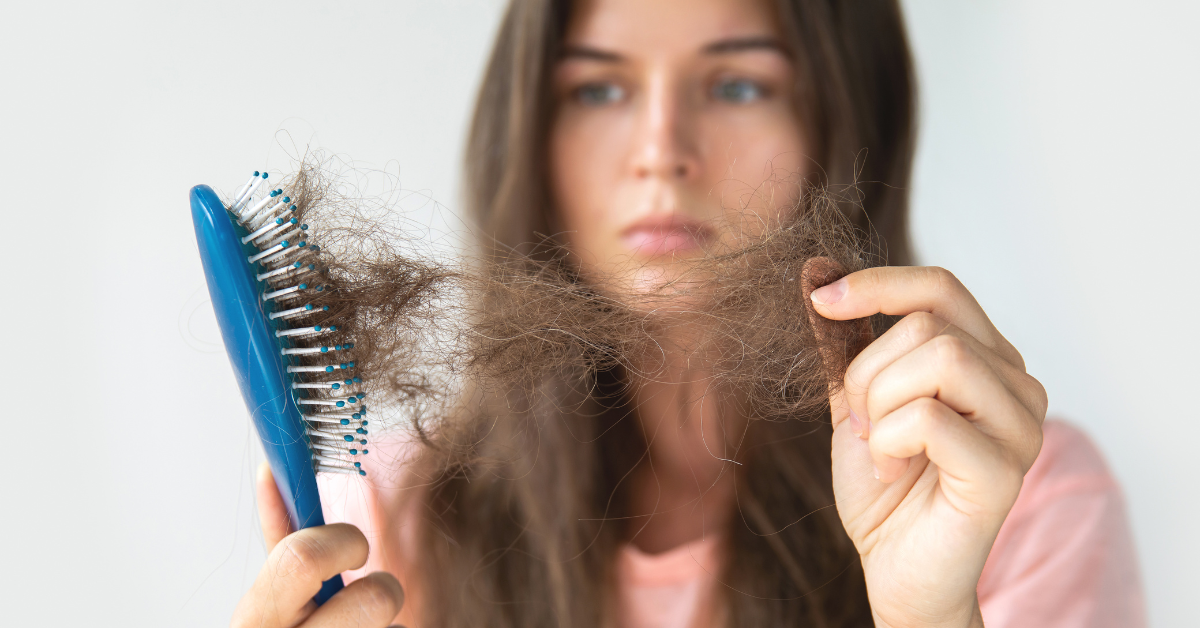
Have you been shocked by the feeling that there is suddenly a lot of hair accumulating in the shower drain and on the brush? Perhaps you have asked yourself the question "Why am I losing so much hair? Is this normal?"
Then you've come to the right place. Before you panic, it's important to know that everyone will experience significant hair loss at some point. Did you know that it's completely normal to lose up to 150 hairs per day?
If you're suddenly losing a lot more hair than usual, there are a number of things you can do about it. Read on to learn more about hair loss and what's considered normal.
Have you brushed your hair several times and then wondered if you are losing too much hair and maybe should do something about it?
According to English Association of Dermatologists It is completely normal to lose between 30-150 hairs a day as part of the hair's natural life cycle.
So, how do we know if we are losing hair normally or if it is really hair loss? We will find out here! Read on and you will feel much wiser about why you are losing a lot of hair. Plus, you will get our best advice on how to prevent hair loss. 
The definition of normal hair loss
If you're losing a lot of hair, how do you know if it's too much?
Here is the definition of normal hair loss:
Losing a lot of hair is a normal and necessary part of the hair growth cycle. It is completely normal to lose 50 to 150 hairs per day. It may sound like a lot, but the average person has 100,000 to 150,000 hairs on the head at the same time.
You therefore don't have to worry that it will be visible on the thickness of your hair, even if you lose 150 hairs a day. If you feel like you see hair loss all around you, you don't have to worry that it will be visible on your hair.
To gain an understanding of normal hair loss, and why we lose a lot of hair, it is important to first talk about the hair growth cycle:
Hair growth (and hair loss) occurs in a continuous cycle consisting of four main phases. The 100,000 to 150,000 hairs on your head are always in different parts of that cycle. This is a good thing because it means you don't lose all your hair at once!
This is how the hair growth cycle works: 
1. The Anagen or Hair Growth Phase
In the first phase of the hair growth cycle, the cells in the hair follicles divide rapidly, resulting in new hair growth.
80-90 percent of hair is in the anagen phase of the hair growth cycle. This phase lasts between two and seven years, and the length of the anagen phase determines how long your hair can grow. Many factors affect the length of the anagen phase, some examples are genetics, nutrition, age and general health . The best way to stop hair loss is by having healthy habits. This is because your health can affect the growth phase of your hair (we will go into more depth on this topic later). 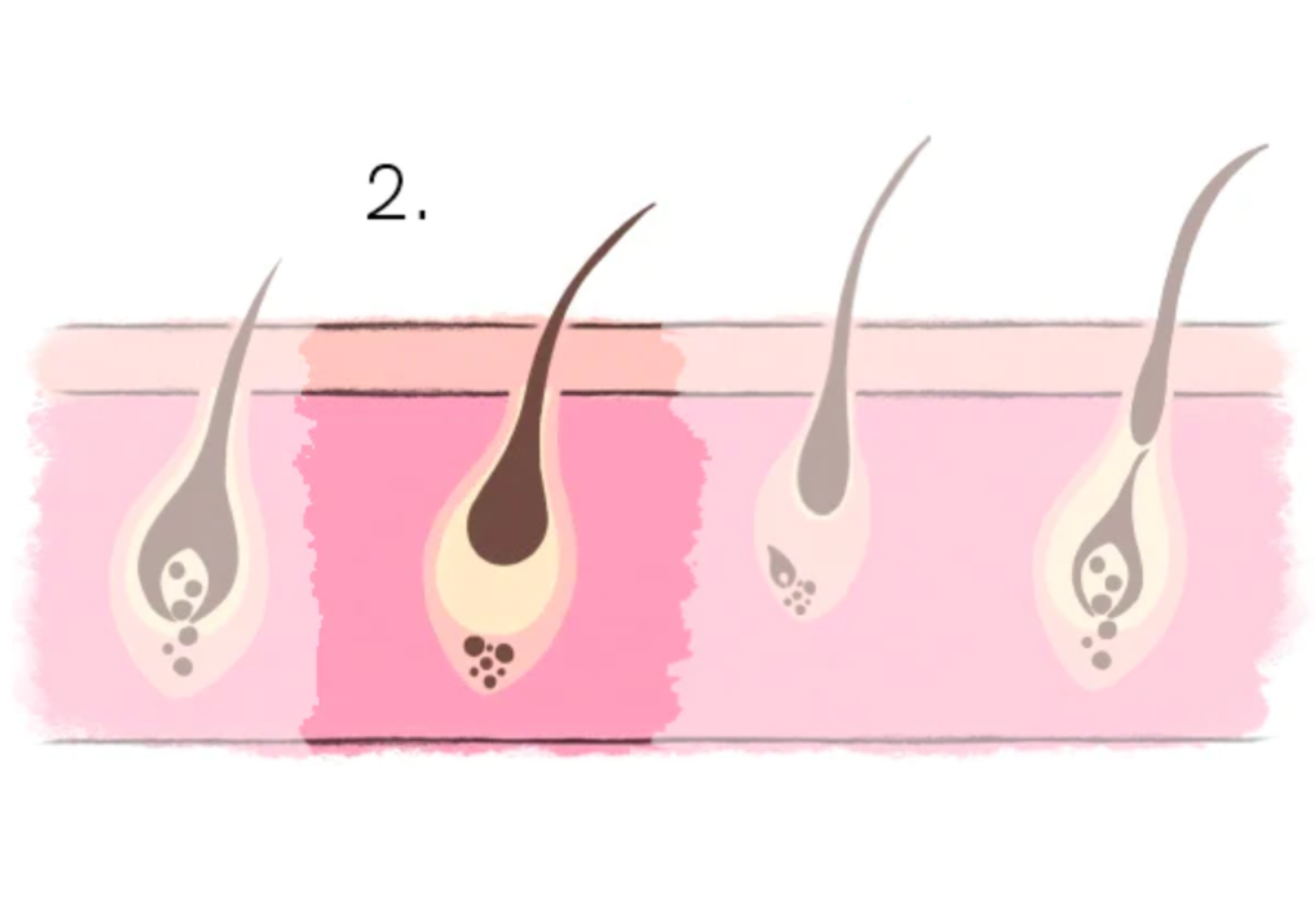
2. The catagen phase or transition phase
In the second phase of the hair growth cycle, the hair reaches its maximum length and begins to release the hair root; it becomes inactive and begins to shrink into a so-called "Club Hair".
The hair now moves up towards the skin barrier and detaches from the hair root. It then loses its blood supply and will therefore not receive nourishment from within or have the opportunity to grow further.
This transitional phase is the shortest phase in the hair life cycle and lasts for approximately 3-4 weeks . Only about 1% of your hair is usually in this phase at a time. 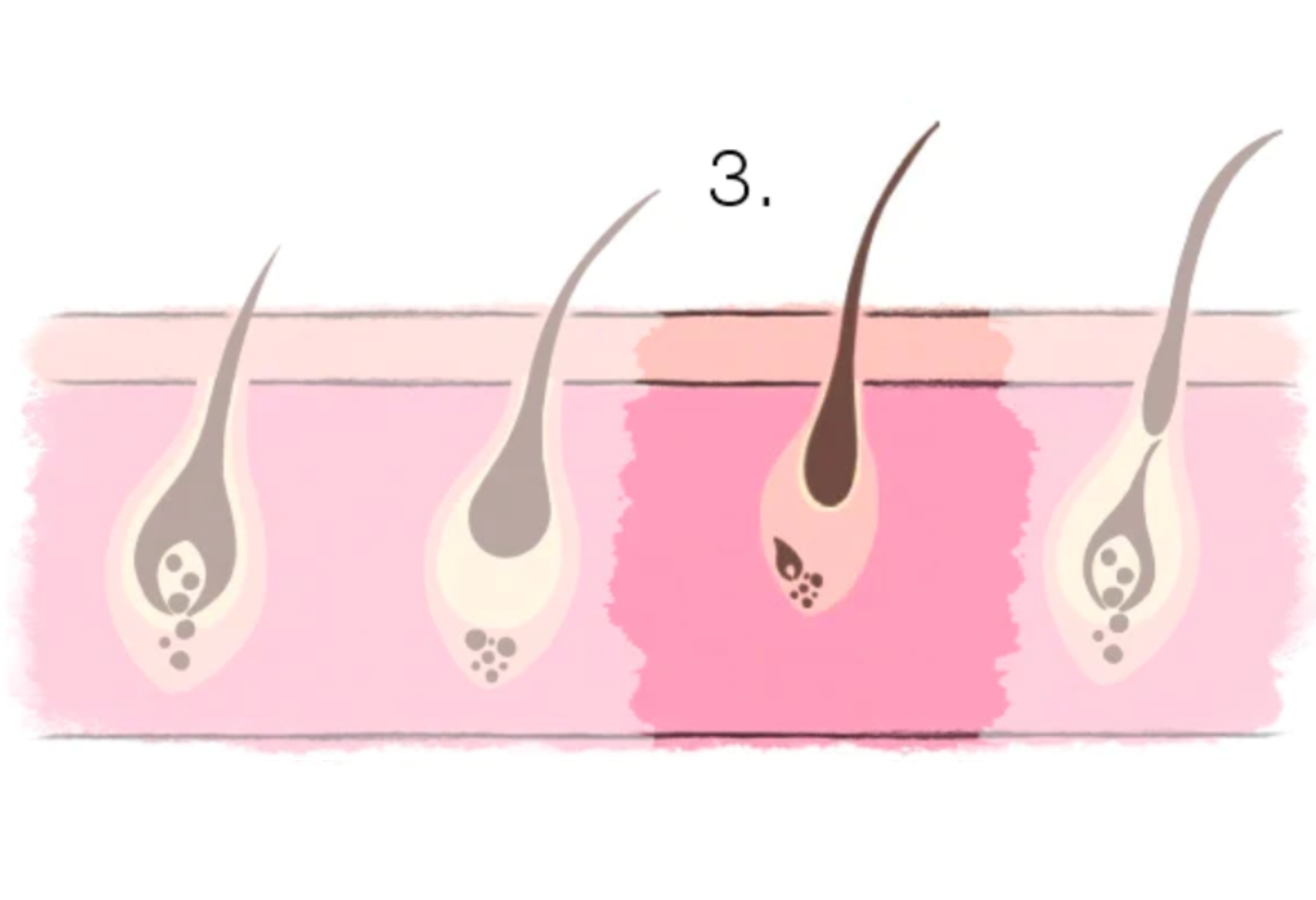
3. The telogen phase or resting phase
In the third phase of the hair growth cycle, your club hairs move, and although they are resting, they are still attached to the scalp. A new hair begins to grow underneath it, and the new hair will eventually take its place.
This period lasts for about 3-4 months. During this phase, the hair no longer receives blood circulation and all activity stops. Therefore, this phase is also called the resting phase. About 14% of your hair follicles will be in the resting phase at a time. The resting phase is part of the rejection phase (the fourth, exogenous phase). 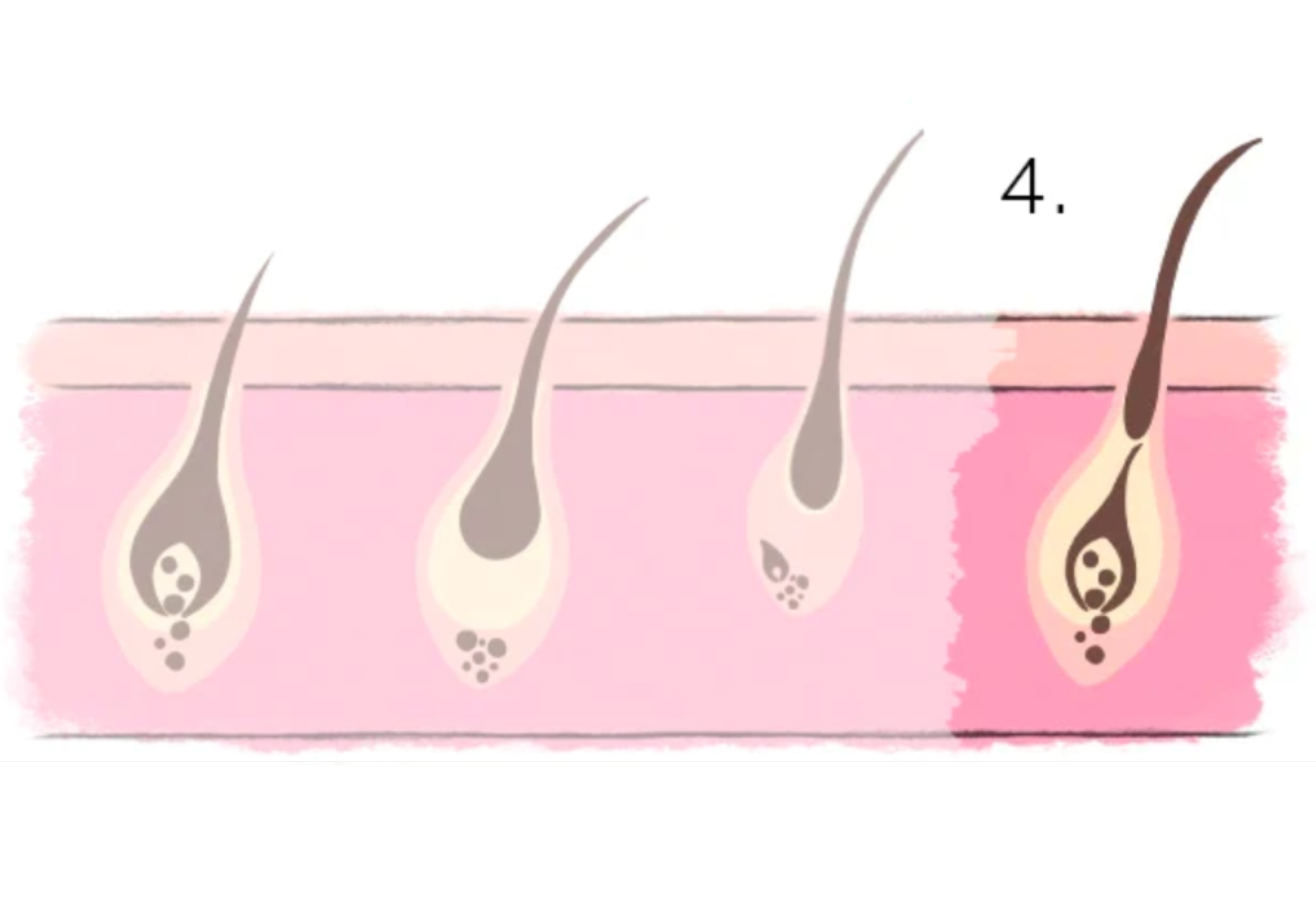
4. The exogenous phase or hair loss phase
In the fourth and final phase, the exogenous phase, of the hair growth cycle, your "club hairs" are released and fall out.
Once a hair reaches this phase, there is nothing you can do to prevent it from falling out. Once the exogenous phase is complete, the hair follicle returns to the anagen phase and forms a new hair, and the process repeats itself over and over again!
Stimulate hair growth with nourishing shampoo, nettle and scalp brush. Read more here >> 
Hair loss vs. Hair thinning
Losing up to 150 hairs a day is a completely normal and necessary part of the hair growth cycle. If you are losing more than that, you may be suffering from hair loss.
Many types of hair loss occur because an excessive amount of hair follicles go from the growth phase to the catagen transition phase at the same time, with hairs falling out at about the same time 4-5 months later.
This can be due to many different things such as physical or mental stress, illness, medication, childbirth, drastic weight loss or similar. are very common causes of hair follicles entering the transition and resting phases prematurely. When you lose a lot of hair in this way, where abnormally large amounts of hair fall out at about the same time, your hair can both feel and appear thinner than it normally is. This is categorized as hair loss. 
If you are experiencing hair loss, you are definitely asking yourself the question: "Why am I losing so much hair?" Of course, we will find out here:
Why am I losing so much hair?
So why do people lose hair? People with curly hair tend to lose more hair than those with straight, thin, or fine hair .
The fact that those with curls lose a lot of hair is partly due to their hair type and genetics, but also because they tend to use more heat tools in the form of straighteners, which can be very damaging to the hair.
High heat makes your hair dry and brittle as it removes its natural moisture, which leads to more hair loss . If you have longer hair, you are also more likely to lose a lot of hair as it is more exposed to daily wear and tear.
There are countless reasons for hair loss and why you may be losing more hair than usual. What we have covered so far are just a few factors that can force your hair into the transition phase prematurely.
The most common reason why men and women lose a lot of hair and experience hair loss is usually linked to hormones and genes.
In most cases, the reason for hair loss is a result of: Androgenic alopecia , also known as male or female pattern baldness.
Losing hair in this way is not directly linked to the hair growth cycle but to a certain hormone. This means that a hormone called DHT shrinks the hair follicles until they stop producing hair completely. When this happens and the hair follicles shrink, the hair falls out and you may experience a lot of hair loss without new hair growing back.
Another common reason for losing a lot of hair is hair styling or using products that are too harsh.
If you use heat and styling tools such as blow dryers, curling irons and straighteners frequently, your hair will not only become dry and damaged, it can also lead to damage to the hair follicles and risk tearing out healthy hair.
See our styling tips without chemicals and heat at the bottom of the post.
Similarly, too harsh hair care products, with a lot of Harsh chemicals in them such as; SL sulfates, parabens and phthalates, not only dry out the skin on the scalp but also damage the hair follicles and cause the hair to enter the transition phase prematurely.
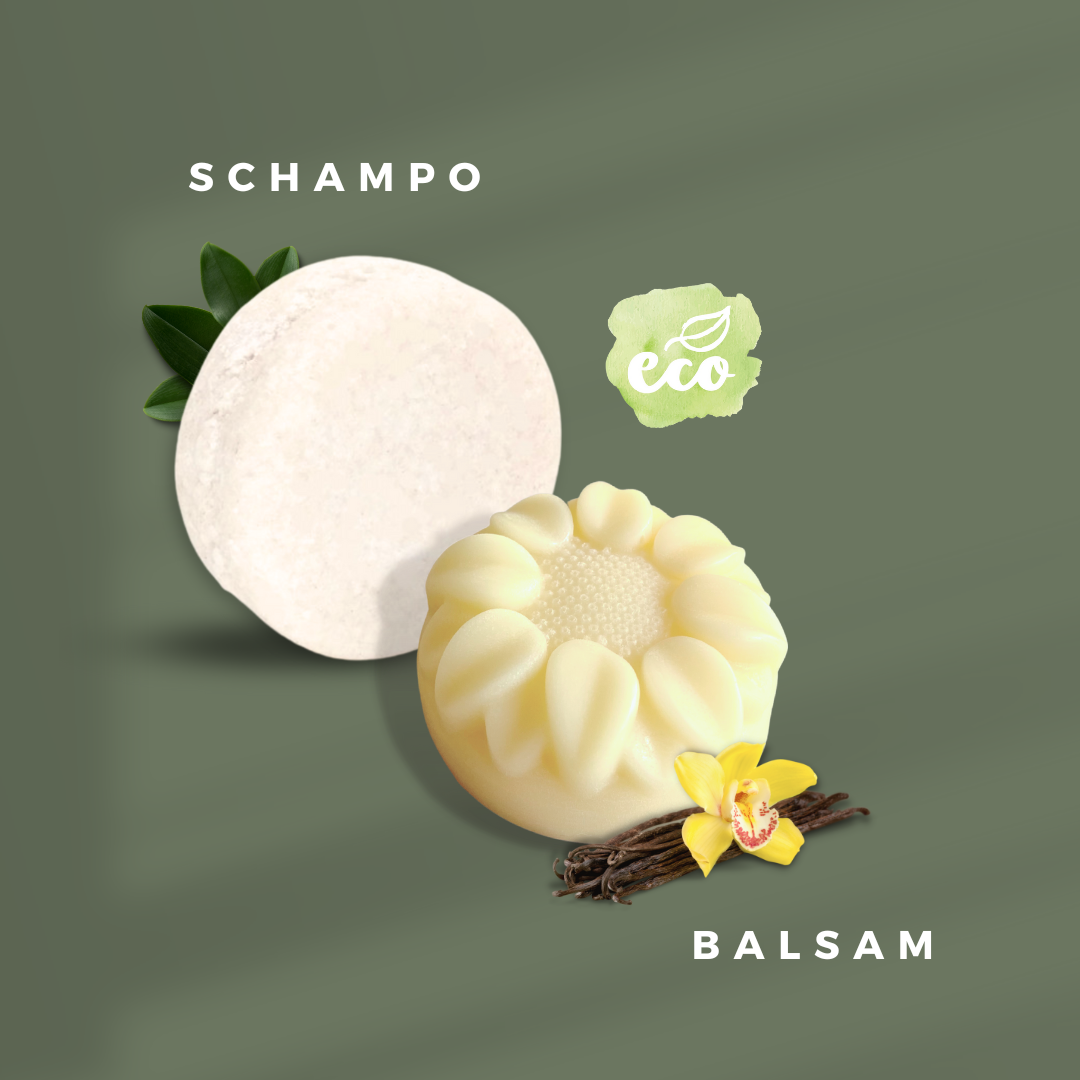
Gentle and nutritious shampoo & conditioner bars free from Sulfates, Parabens and Phthalates - just as easy as regular shampoo but better! To the products >>
The Växa Series that brings dormant hair follicles to life with patented plant extract >> 
Poor diet and lifestyle can cause hair loss
If you don't cover your body's needs for good nutrients, vitamins and proteins in your diet, the hair follicles weaken and your hair becomes dry, dull and frizzy or, in the worst case, falls out. Losing a lot of hair can therefore simply be due to your diet and lifestyle.
If you are losing a lot of hair or are just more curious about the causes of hair loss and how to treat it in the best possible way, read our article here about the most common causes of hair loss in both men and women.
6 signs that you are losing too much hair
If you're losing a lot of hair, how do you know if it's normal hair loss or if you're actually suffering from hair loss? Below are a few signs to look out for:
-
Patchy hair loss - Losing circular patches of hair can be a sign of a medical condition called alopecia areata . If you find that you are losing a lot of hair in this patchy way, you should contact your doctor. In most cases, the hair will grow back after a few months or even years.
-
High hairline -One of the first things men notice when they lose their hair is that the hairline has started to move upwards. This is a sign of androgenetic alopecia.
-
Thin crown - Another sign that you are losing a lot of hair is that the crown becomes noticeably thinner.
-
Sporadic hair loss: - In women, hair loss mostly occurs as a single thinning across the entire hairline, and women therefore very rarely get definite bald patches on the scalp. Instead, women may find that they lose a lot of hair all over their head, and their entire hair therefore becomes thinner over time. Other characteristics of female pattern hair loss and how to prevent or treat it can be read much more about in this article about hair loss in women.
-
Thinner ponytail - Women with long hair may notice that they are losing hair if the diameter of their ponytail is significantly reduced.
-
Extra hair falls out - If you notice more hair than usual on your pillow, in your hairbrush or in the shower drain, you may be suffering from excessive hair loss.
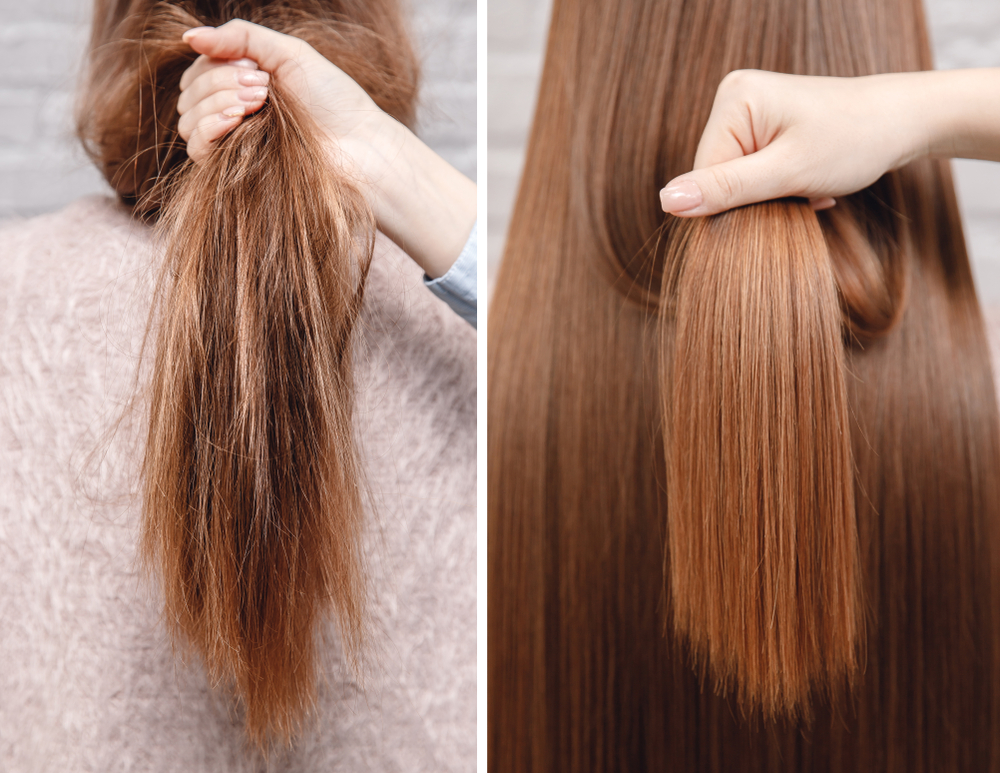
Strengthen your hair with a nourishing and gentle shampoo that moisturizes and cares for your hair >>
Luckily, your body is smart enough to let you know when something is wrong. So if you're losing a lot of hair, it could be one of your body's many little signs and symptoms that something needs to be changed or addressed.
If you recognize these signs of hair loss, talk to your dermatologist. Your doctor can diagnose the cause of your hair loss and help you come up with a treatment plan to stop it. Below are some tips you can try yourself to reduce hair loss.
How to avoid hair loss: 8 tips
Even if you lose hair without being affected by hair loss, it can be very annoying and make it difficult to achieve your hair goals. To lose less hair and reduce hair loss, you can improve the anagen phase with the following tips:
Avoid hair loss tip #1
Eat a balanced diet

Healthy hair starts from within and therefore it is very important to eat a diet rich in many vitamins, minerals and other nutrients that are hair-promoting to avoid hair loss.
To boost your hair growth phase and avoid hair loss, you should aim to eat a diet rich in proteins, healthy fats, and plenty of fruits and vegetables.
Are you unsure which foods are best for preventing hair loss? Try these:
- Egg
- Lean proteins like chicken and fish
- Healthy fats like avocado and olive oil
- Dark leafy vegetables
- Fruits and vegetables rich in vitamin C, such as oranges and peppers
If you're not a fan of eggs or simply can't stomach another bite of cabbage, try a hair growth supplements .
The supplements from Dalarnas EKO are formulated with all the vitamins and minerals your hair follicles need, including 500 mcg of the hair growth savior. biotin . To put that into perspective, you would have to eat 500 eggs daily just to get the same amount of biotin through your diet! In addition, the supplements from Dalarnas EKO are vegan, hypoallergenic and they contain no artificial colors or flavors.
By providing your hair follicles with the vitamins and minerals they need, you maximize the anagen phase and thus lose less hair.
Avoid hair loss tip #3:
Reduce the heat

Are you used to styling your hair with heat? This could be a reason why you are losing more hair.
Therefore, you should reduce the use of heat tools for your hair, but if you really can't do without them in your everyday life, turn down the heat when you use them. We have tips on styling your hair without heat at the bottom of the post .
Daily heat styling causes great damage to the hair shafts and leaves them sensitive. Eventually, the sensitive hair shafts will be damaged and this can cause you to lose hair.
Take a break from heat tools and reduce the risk of losing a lot of hair. There are many heat-free hairstyles that are incredibly beautiful and rewarding!
If you still want to use a hot tool, we recommend that you use a heat-protecting & nourishing conditioner >>
I have a natural tendency to always use a hair dryer, heat brush and curling iron before, as I felt that it was the only way to get rid of my thick hair that easily looked like a pig without heat tools. After a year of organic and gentle hair care, I can now let my hair air dry and I get a beautiful wave of hair without styling, which is absolutely fantastic! If I still want to style it, I make sure to use heatless curl method , which saves both hair quality and time. You will find a video about heatless curls further down in the post.
Avoid hair loss #4
Start with the tops

Brushing or detangling your hair daily is an obvious part of a healthy hair care routine. But you might want to think about how you brush your hair.
Always start brushing from the ends and work your way up.
Starting from the roots and working your way down to the ends is something you absolutely should not do as this leads to small tangles and tangles. This leads to hard brushing that wears down the hair and you risk pulling out hairs that don't need to come off.
A good trick is also to braid your hair before bedtime, and then detangle it with a wide-toothed wooden comb or with your fingers to optimize and reduce wear on your hair.
Make sure to use a gentle hair tie that doesn't tug on your hair while you sleep.
We love these satin scrunchies:

Here you will find scrunchies in different colors for minimal wear on your hair >>
Avoid hair loss tip #5
Avoid tight sets
If you like a sleek, tight ponytail high on your head, like many women do, or a sassy, tight man-bun at the nape of your neck, you may be contributing to hair loss without even knowing it. Tight hairstyles like buns, updos, and ponytails stress your hair, scalp, and hair follicles, which can lead to hair loss or hair loss.
A good rule of thumb is not to tighten or pull your hair when you have it up. Therefore, loosen the ponytail or knot and avoid tassels that pull and tear the hair. Instead, put your hair up in more gentle tassels such as Scrunshies or let your hair hang loose and move in the wind.
If you have a tendency to lose a lot of hair, you should not use tight hairstyles and braids that pull and tear your hair.
Avoid hair loss tip #6:
Upgrade your hair washing routine

The perfect time to give your hair extra nourishment is when you shower.
Why? Because with the right hair products you can give your hair the care and moisture it needs, making it stronger and thus reducing the risk of it breaking or falling out.
The Växa series Shampoo & Conditioner contains active vegan microproteins that can penetrate deep into the hair and hair follicles and have a rebuilding effect on the hair cells, which are mainly composed of proteins. They are therefore developed to strengthen the hair in depth, so that it becomes healthier and stronger after each hair wash.
Tips for those with long hair: Remember that you only need conditioner on the lengths and shampoo on the scalp. The lengths will be gently cleansed by the shampoo that is rinsed over the lengths.
Our shampoo and conditioner are all organic and of high quality, providing plenty of moisture and nourishment. Moisturized hair is healthy hair, so be sure to use conditioner to prevent hair loss.
Avoid hair loss tip #7:
Treat wet hair gently
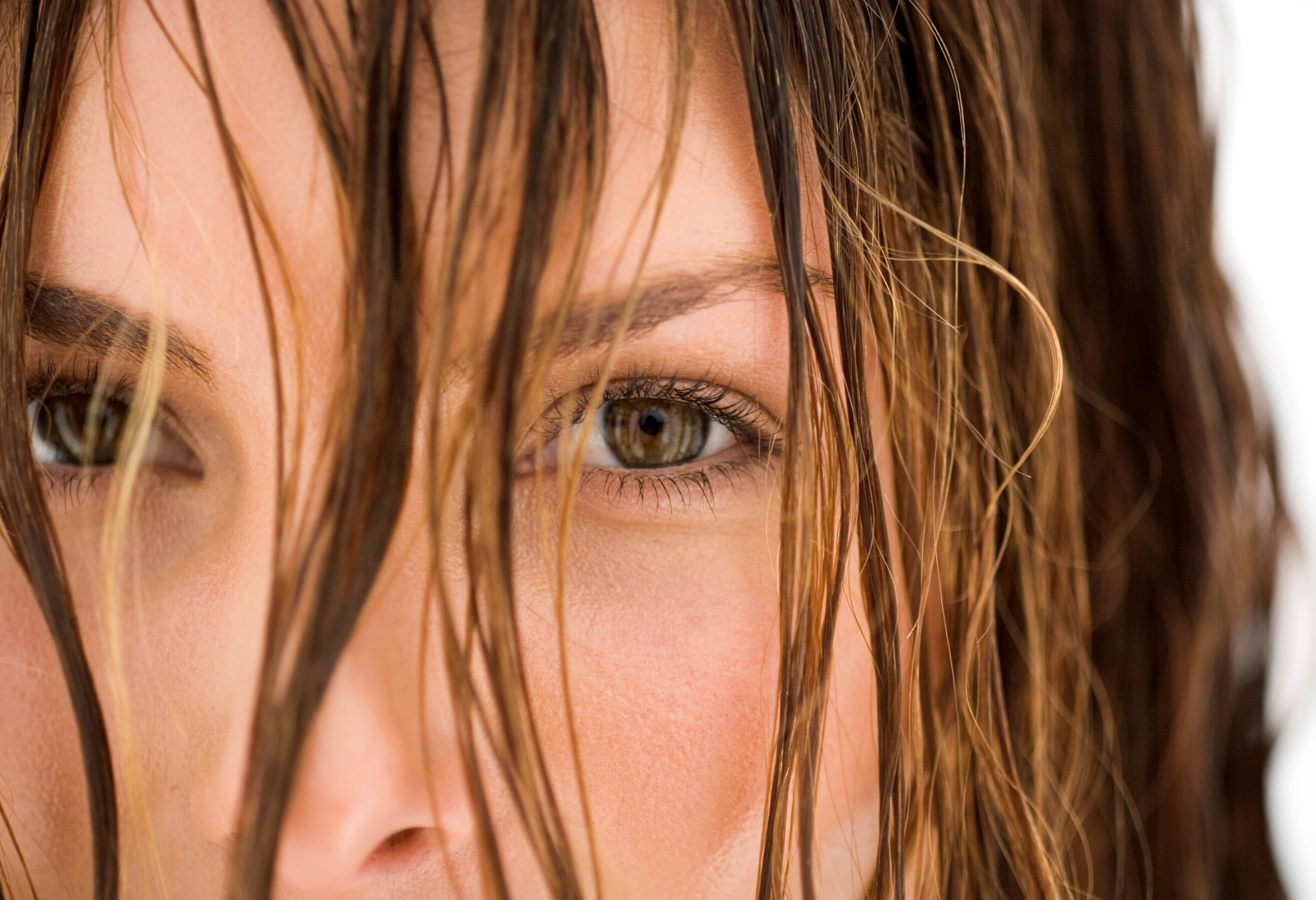
The most common hair care mistake that most people make
Raise your hand if the first thing you do after getting out of the shower is wrap your hair in a big fluffy towel! If you use a cotton towel for your hair, you're definitely not alone. This is a common hair care mistake that most people make!
The cotton fibers in regular towels are actually too harsh on your hair, and can actually leave your hair tangled and frizzy. Because this is how it is: Hair is most sensitive when it is wet, so you need to be extra careful to prevent it from breaking or losing hair.
Try ours instead Bamboo Hair Towel! It is made from a bamboo-cotton blend which is a highly absorbent mix of 70% bamboo and 30% cotton. Bamboo is an extra soft, antibacterial and gentle material that will prevent sensitive wet hair from breaking.
Leave a comment
This site is protected by hCaptcha and the hCaptcha Privacy Policy and Terms of Service apply.